The Tides of Ruin: Decoding the Global De-Leveraging Event
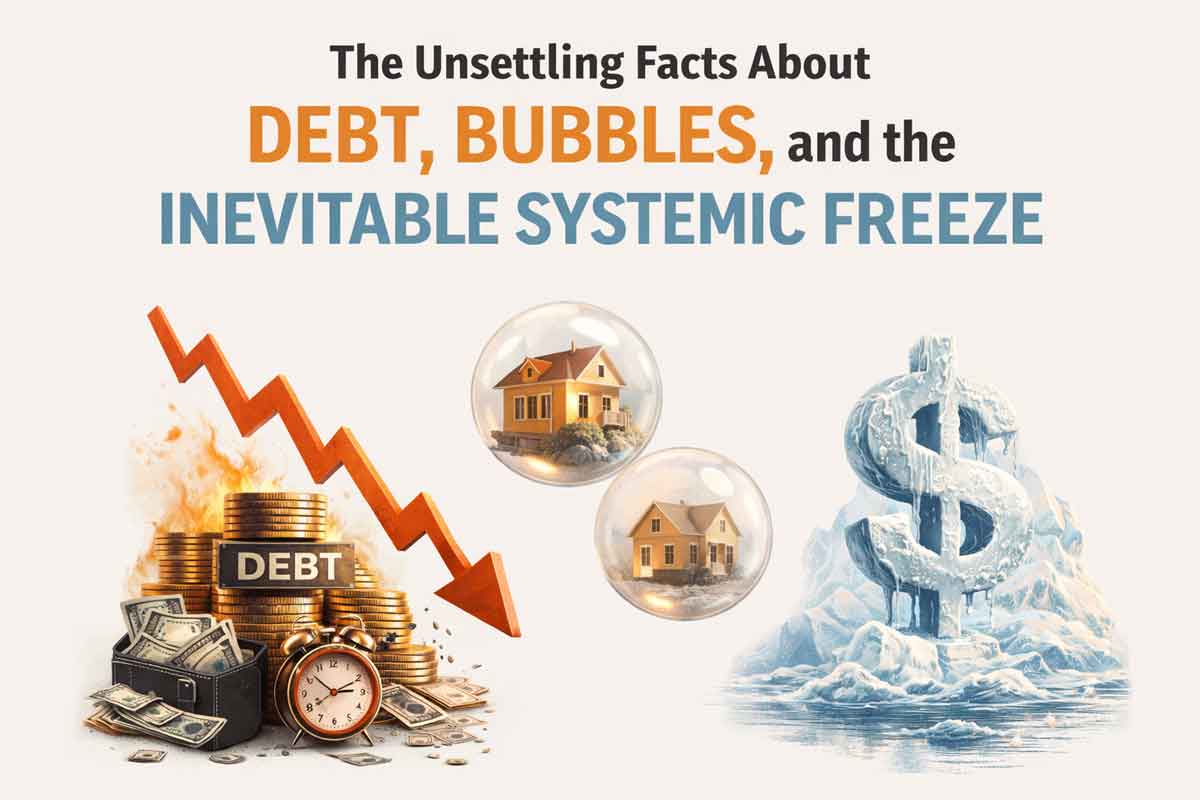
The Unsettling Facts About Debt, Bubbles, and the Inevitable Systemic Freeze
The world economy is not sailing on calm seas; it is clinging to a hull constructed of synthetic confidence and unprecedented leverage. A financial meltdown is no black swan event—it is a cyclical gravitational pull; an entropy built into the very architecture of modern finance. The Global Financial Crisis (GFC) of 2008 was merely a textbook lesson in how excessive risk-taking and complex securitization can collapse the structure. The current danger is that we have memorized the 2008 answers but are facing an entirely new exam: the risk has shifted from private debt (toxic mortgages) to a $102 trillion mountain of public debt and concentrated technology speculation. The fundamental question is not if the financial balloon will burst, but which pin will pierce the current air of irrational exuberance?
The Three Fuses on the Debt Mountain
The genesis of every great crash—from the Tulip Mania (1637) to the Dot-Com implosion (2000)—is always the same: easy credit and mispriced risk. Today, three monumental fuses threaten to ignite the next systemic crisis. The first is Sovereign Debt: the massive global debt mountain is now being serviced by higher interest rates, creating an acute fragility, especially in developing nations and advanced economies carrying debt loads exceeding 125% of GDP. This vulnerability is compounded by political gridlock and trade policy shocks that compound uncertainty.
The second fuse is Leveraged Speculation in Transformative Tech (the “AI Bubble”). Huge capital expenditure is flowing into a handful of tech behemoths whose valuations are now stretched far beyond fundamentals, reminiscent of the late 1990s. This market concentration—where a few companies dominate benchmark indices—amplifies the risk of a sharp correction that could vaporize trillions in notional wealth. The third, most insidious fuse is the rise of the Shadow Banking System and the nonbank financial institutions (NBFIs), which have taken on the high-risk leverage that regulated banks jettisoned, raising systemic opacity and increasing the threat of a sudden, uncontrolled liquidity shock.
The Inevitable Freeze and the Contagion Event
When the pin hits the balloon—be it a major corporate default, a collapse in tech speculation, or a sovereign debt downgrade—the process of global meltdown is terrifyingly swift. It begins with a liquidity freeze: institutions stop lending to each other because they cannot assess the true value or solvency of their counterparties. This immediately forces a de-leveraging cascade where assets must be sold at fire-sale prices to cover obligations, accelerating the price collapse across every asset class.
The final stage is Global Contagion. Because toxic assets and massive debt positions are owned worldwide, the crisis immediately infects international trade and financial flows, amplified by structural weaknesses like currency mismatches and concentrated dealer activity. The meltdown is thus not just a correction; it is a rapid, systematic unwinding of the entire leveraged financial structure. The IMF finds that financial stability risks remain elevated amid stretched asset valuations and growing pressure in sovereign bond markets.
The lesson is not to fear the crash, but to recognize the structural dynamics that make it inevitable. The financial machine is currently configured for maximum speculation and minimum resilience. The cycle demands a cleansing event. Are central banks equipped to handle a simultaneous crisis of public debt and concentrated asset bubbles, or will the next crash usher in a multi-year economic winter? The architecture of global finance currently suggests that the time for prudent repair is over, and the time for reckoning is fast approaching.