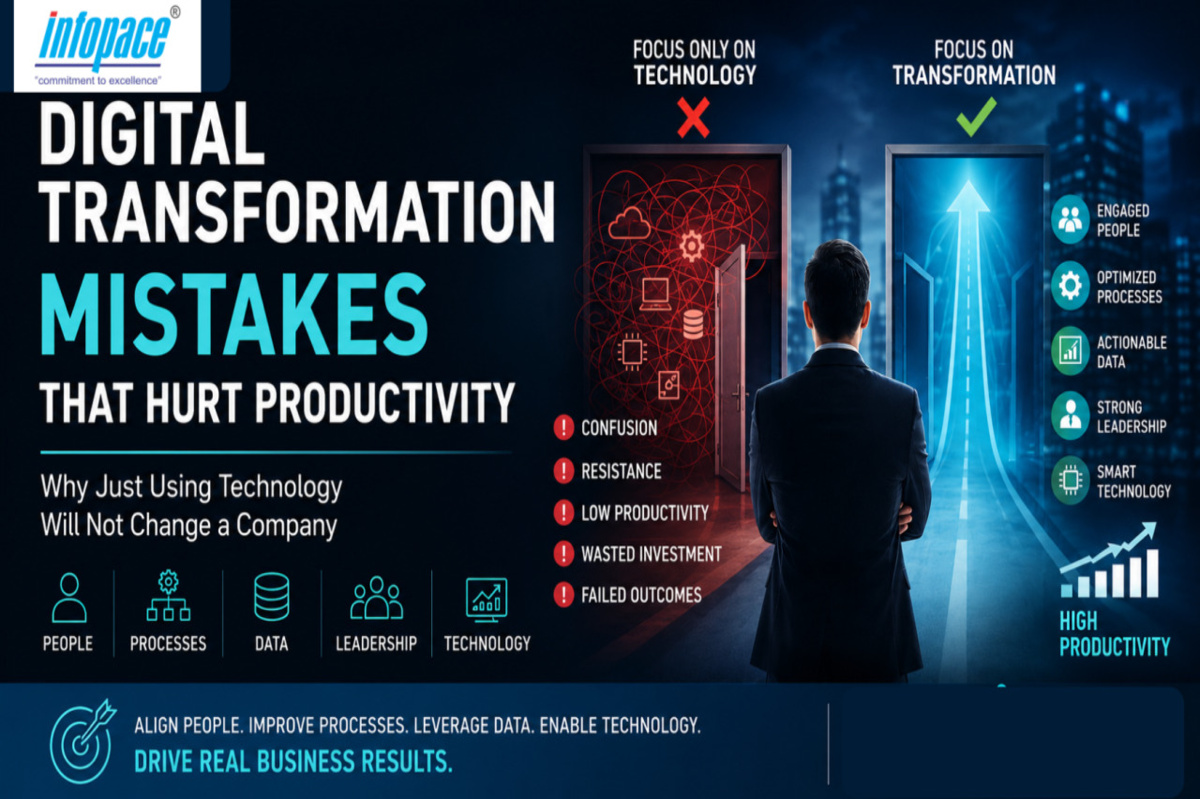
Why Just Using Technology Will Not Change a Company
Digital transformation is a deal for companies. They spend a lot of money on transformation. They use things like automation and artificial intelligence and cloud platforms to save money and increase productivity and make customers happier.
Many companies do not get the results they want from transformation. Their projects go over budget. Employees struggle to adapt and productivity gets worse before it gets better. Sometimes the benefits they expected from transformation never happen. The truth is, digital transformation does not fail because of technology. Digital transformation fails because companies focus much on technology and forget about people and processes and systems that need to change too.
At Infopace we think of transformation as a business journey, not a technology project. To succeed a company needs to align its strategy and operations and leadership and culture and technology to achieve its business goals from transformation.
The Mistake of Thinking Technology is the Answer
- One common mistake company make is thinking that buying technology will automatically solve their business problems. Many companies invest in software and tools without understanding the problems they are trying to solve with transformation.
- Technology can improve processes. It cannot fix workflows or unclear responsibilities or weak leadership or poor organizational alignment. When companies use technology to improve processes, they often create inefficiencies.
- Before implementing any technology, solution companies must assess how work is currently being done and identify bottlenecks and redesign processes if necessary. At Infopace digital transformation starts with understanding the business, not the software.
Forgetting About the People in Digital Transformation
- Technology adoption is often seen as a challenge. In reality it is a people challenge. Employees are the ones who use systems and follow processes and adapt to ways of working. If they do not embrace transformation, even the most advanced technology investments can fail.
- Resistance to change can take forms. Some employees fear that automation will replace their jobs while others may feel overwhelmed by learning systems or worry about losing control over processes. Without communication and change management resistance can slow adoption. Reduce productivity.
- Infopace addresses this challenge through change management frameworks that focus on stakeholder engagement and leadership alignment and communication planning and capability development and adoption monitoring. Digital transformation succeeds when people understand the purpose of change and feel equipped to participate in it.
Lack of Leadership Alignment
- Another reason digital transformation initiatives fail is the absence of leadership alignment. Many companies view transformation as an IT initiative rather than a strategic business initiative.
- When leadership teams are not aligned on objectives and priorities. Expected outcomes digital transformation efforts become fragmented. Different departments pursue goals resulting in confusion and duplication of effort and inconsistent execution.
- Successful digital transformation requires leadership commitment. Leaders must define a vision. Communicate priorities and allocate resources and remove barriers and reinforce desired behaviours throughout the organization. At Infopace leadership alignment is critical to transformation success.
Implementing Technology Without Improving Processes
- Many companies try to automate processes without evaluating whether those processes are effective. Automation can improve speed and efficiency. It cannot compensate for poor process design.
- If an inefficient process is automated the company simply performs the inefficiency faster. Before implementing solutions businesses must examine how work flows across departments. Identify redundancies and eliminate steps and streamline operations.
- This process approach helps ensure that technology investments generate improvements than creating additional complexity. Infopace supports organizations through enterprise diagnostics and process optimization initiatives that establish a foundation before digital tools are introduced.
Failing to Use Data Effectively
Companies today generate a lot of data from transformation. Many struggle to convert that data into insights. Dashboards are. Reports are generated and information is collected continuously yet decision-makers often lack the intelligence required to drive performance improvements. This happens because data collection and decision-making are frequently disconnected. A successful digital transformation requires more than access to information; it requires a framework for turning information into business decisions. At Infopace data analytics is viewed as a capability than a reporting function. We help organizations build analytics ecosystems that connect data sources and generate insights and strengthen decision-making across functions.
Underestimating How Ready a Company is
Not every company is equally prepared for transformation. Some companies attempt to scale transformation initiatives without evaluating their maturity and capabilities and workforce readiness and cultural adaptability. As a result, projects often face delays and cost overruns and adoption challenges. Understanding readiness is essential before embarking on transformation efforts. This includes assessing leadership commitment and employee capabilities and technology infrastructure and data maturity and process standardization and change readiness. emphasizes readiness assessments as part of its transformation methodology helping companies understand their state before defining a future-state vision. This reduces risk. Improves the likelihood of successful implementation of digital transformation.
Focusing on Technology Rather Than Business Results
One of the mistakes companies make is measuring success based on technology deployment than business impact. Installing a platform does not guarantee value creation from transformation. Success should be measured through outcomes such as improved productivity and faster decision-making and enhanced customer experience and reduced operational costs and increased revenue and better employee engagement. Technology is a means to an end not the end itself. Companies that focus on implementation milestones often lose sight of the business objectives driving transformation. At Infopace every digital transformation initiative is linked to business outcomes. Technology investments are evaluated based on their ability to support goals and create value.
The Importance of a Comprehensive Approach
Digital transformation is most effective when it is approached as a business initiative. Digital transformation and people and processes and data and leadership must work together within a framework.
When any one of these elements is neglected digital transformation efforts become vulnerable to failure. This is why Infopace adopts an approach that combines advisory and change management and process improvement and leadership alignment and data analytics and execution governance. Then focusing solely on technology implementation, the emphasis is placed on building organizations that are capable of adapting and learning and growing in a digital environment.
Digital transformation has become essential for companies seeking to remain competitive in a data-driven world. However, technology alone does not create transformation. The companies that achieve results are those that recognize transformation as a business challenge rather than a technology challenge. They invest in leadership and people and processes and culture alongside tools.
They understand that productivity improves not when software is installed but when organizations change the way they operate. At Infopace digital transformation is viewed as the integration of strategy and technology and people and execution. By helping companies align these elements Infopace enables businesses to move beyond technology adoption and achieve performance improvement. Because successful digital transformation is not about implementing systems it’s about creating an organization that’s ready, for the future.
Disclaimer: This article is for informational and thought-leadership purposes only. The views expressed are general in nature and do not constitute business, technology, financial, legal, or professional advice. Outcomes of digital transformation initiatives may vary based on organizational readiness, leadership, market conditions, and execution capabilities. Readers are encouraged to seek professional guidance before making strategic business decisions.